• New Jersey Office: 856.203.6108
  • Pennsylvania Office: 610.880.7007
  • FAQ
  • CONTACT
Apex Commercial Roofing
  • Services
    • Roof Inspections
    • Repairs & Replacements
    • Snow Removal
  • Roof Systems
    • TPO
    • EPDM
    • Coatings
      • Silicone
    • Metal
    • PVC
    • Asphalt
  • About Us
    • Partners & Certifications
    • Gallery
    • Testimonials
    • Blog
  • Areas We Serve
    • Atlantic City
    • Trenton
    • New Brunswick
    • Newark
    • Elizabeth
    • Paramus
    • Philadelphia
  • Industries
    • Retail
    • Industrial
    • Senior Living
    • Restaurant
    • Medical
    • Property Management
  • Emergency Response
  • Menu Menu

How to Choose the Right Material for Your Commercial Roof Replacement

A roof decision is an operations decision. The material choice affects energy costs, service calls, leak risk, and how smoothly work can be staged without creating unnecessary disruption.

The smartest way to choose is to start with decision criteria, then narrow options based on roof structure, weather exposure, total cost of ownership, maintenance expectations, and warranty requirements. From there, the most common commercial roofing materials become easier to compare in a way that fits the building, not a generic checklist.

First, Is It Time for a Full Roof Replacement?

Before comparing systems, confirm the scope. A full replacement is not always the best first move, and a rushed decision can lead to budget surprises.

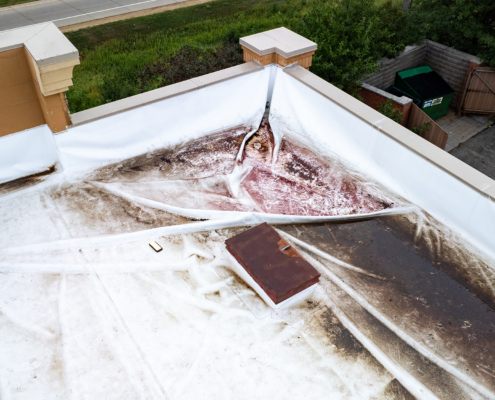
Replacement tends to make sense when leaks show up in new areas after multiple repairs, the roof is near the end of its expected service life, or the membrane and flashings are failing across large sections. Saturated insulation and recurring wet areas are also big indicators that repairs will keep stacking up.

A professional inspection matters here because the roof’s condition determines whether a coating can work, whether tear-off is required, and whether underlying issues like trapped moisture or deteriorated decking will affect schedule and cost. When a commercial roof replacement is the right call, that same inspection becomes the foundation for a predictable plan.

Repair vs. Coating vs. Replacement

This is adjacent intent, and it is worth addressing early because it changes what “best material” means.

Repairs fit when damage is localized and the surrounding system is stable. Coatings can be a strong option when the roof is structurally sound, moisture is limited, and the goal is to extend service life while keeping disruption low. Replacement is usually the smarter long-term move when the assembly is failing system-wide, insulation is compromised, or code-driven upgrades are required.

The key is matching the solution to the roof’s current condition instead of forcing a product decision first.

Key Factors to Consider When Choosing a Commercial Roofing Material

Building Type and Roof Structure

Flat and low-slope roofs succeed or fail at details. Material selection should reflect roof slope, drainage layout, penetration density, parapet and edge conditions, rooftop equipment, and expected foot traffic.

Building use also matters. Retail centers deal with high-visibility disruptions and customer access. Restaurants introduce grease exposure at vents and rooftop units. Industrial sites often include chemical exposure and heavier rooftop traffic. Medical and senior living facilities tend to prioritize clean staging, safety, and predictable work windows. Property management teams prioritize repeatable maintenance and documentation across a portfolio.

Climate and Weather Exposure

Apex Commercial Roofing works across NJ, PA, and nearby markets where roofs see summer heat, freeze-thaw cycles, heavy rain, wind events, and winter snow load. Those conditions influence seam performance, edge durability, reflectivity, and how forgiving a system is when temperatures swing during installation.

Budget vs. Long-Term ROI

Upfront cost is only one number. Lifecycle cost includes energy performance, planned maintenance, repair frequency, and the operational cost of leaks. Warranty strength and warranty compliance also matter, since many manufacturer warranties rely on approved components, specific installation methods, and documented workmanship.

If you want cost clarity, evaluate the total cost of a commercial roof replacement over the expected service life, not the first invoice alone.

Business Disruption and Installation Timeline

Some systems support faster field installation once the substrate is ready. Others include more layers and detail work. Beyond labor, disruption depends on staging, access routes, safety zones, noisy phases like tear-off, and how well the contractor can phase work so your building keeps functioning.

Apex Commercial Roofing can assess your roof, explain which options match your structure and use case, and lay out a disruption-aware plan that keeps operations predictable. 

Schedule an Assessment

Understanding the Main System Options

The goal here is to make the material choice feel practical. Each system has strengths, but the “right” choice is the one that aligns with your building conditions, your risk tolerance, and your maintenance reality.

TPO Roofing Membrane

A TPO roofing membrane is a single-ply system installed in sheets with heat-welded seams. It is common on low-slope commercial roofs because it supports energy-conscious projects and can perform well when detailing is consistent.

This option is often a fit for offices, warehouses, and many retail buildings where reflectivity and predictable maintenance are priorities. It also works well when the roof layout allows crews to move in efficient sections without constant stop-start around penetrations.

Where teams need to pay attention is protection and detailing. Walk paths, service routes around HVAC units, and edge conditions should be planned upfront so the membrane is not treated like a sidewalk. Warranty requirements can also influence accessory selection, fastening patterns, and documentation, so it helps to confirm those expectations early.

EPDM Rubber Roofing

EPDM rubber roofing is a durable membrane known for flexibility and long-term stability. It is often used where temperature swings are a concern and where a simple, proven system is preferred.

It can be a strong choice for buildings that want a membrane that ages predictably with routine inspections and well-executed flashing work. Large sheet sizes can reduce seam count, which can help reduce certain leak risks when the roof is laid out cleanly.

The tradeoff is that performance still hinges on seam and flashing quality, and maintenance teams should keep penetrations, edges, and rooftop equipment areas on a documented inspection cadence.

PVC Roofing System

A PVC roofing system is a single-ply membrane with heat-welded seams and strong resistance to many chemicals, oils, and greases. That makes it a practical option for restaurants, food production, and some industrial environments where rooftop exhaust and contaminants are part of daily life.

PVC can be a smart fit when risk management is the priority, especially where roof failures would be costly due to inventory, equipment, or tenant impact. Like other welded systems, the details matter most at transitions, penetrations, and edges, and warranty expectations can shape which components are used and how they are installed.

Modified Bitumen and Asphalt Systems

Modified bitumen and asphalt-based systems are layered assemblies that have a long track record in commercial applications. They are often chosen when durability and redundancy are priorities, especially on roofs with regular access or complex layouts where a multi-ply approach feels operationally safer.

Because these systems involve multiple layers and additional steps, they can influence installation pacing and daily staging needs. They also benefit from clear roof traffic planning and routine checks so small surface issues do not turn into moisture problems.

Metal Roofing

Metal can deliver long service life and strong durability when the building design supports it. It is often considered for certain commercial structures where slope, drainage, and detailing conditions are compatible with panel systems.

The success of metal depends heavily on correct transitions and penetration details, and it requires attention to expansion and movement. Metal is not a universal fit for every low-slope building, but in the right application it can provide long-term value with a consistent maintenance plan.

Coatings and Silicone

Coatings and silicone restoration systems can extend roof life when the underlying roof is stable and moisture conditions are controlled. This path can reduce tear-off disruption and can be attractive for occupied buildings that need a lighter-touch project.

Coatings depend on preparation quality and substrate suitability. If trapped moisture or widespread insulation saturation is present, a coating can hide problems instead of solving them. That is why inspection and moisture assessment are critical before choosing this option.

How to Narrow Your Options to One or Two Materials

Start with the building’s stress points, then match the system that handles those stress points with the least operational friction.

A practical way to narrow quickly:

  • If grease or chemical exposure is a daily factor, PVC often rises to the top of the list.
  • If energy performance and broad commercial fit are priorities, TPO is often a contender.
  • If your team wants a proven membrane with predictable aging and flexibility through temperature swings, EPDM is often part of the conversation.
  • If foot traffic is frequent and you want a layered assembly with redundancy, modified bitumen can be worth considering.

Then evaluate warranty strength and warranty compliance. Manufacturer requirements, installer qualifications, and maintenance expectations should be clear before you choose. If you are comparing bids for commercial roof replacement, that warranty alignment is one of the fastest ways to separate a clean long-term value from a short-term price play.

Why Professional Guidance Matters in Material Selection

Material choice is tied to execution. The same roof system can perform very differently depending on substrate preparation, edge detailing, flashing quality, and how well penetrations are handled. Code requirements can also influence insulation thickness, drainage upgrades, or edge securement, which affects both budget and schedule.

A qualified contractor should be able to explain the recommendation in plain language, show how it fits your building type, and outline how the job will be staged so the building stays safe and functional. A well-managed commercial roof replacement is organized, documented, and planned around business continuity, not treated as a chaotic construction event.
Make a Confident Roof Material Decision

The right roof material depends on structure, use case, regional exposure, warranty requirements, and how much disruption your operation can tolerate. When those factors are clear, the choice usually narrows to one or two systems that fit both performance and planning needs.

If you want a clear recommendation tied to your building and your schedule, Apex Commercial Roofing can perform a free assessment and walk you through the best-fit options with a disruption-aware plan.

Share This Post

  • Share on Facebook
  • Share on X
  • Share on Pinterest
  • Share on LinkedIn
  • Share on Tumblr
  • Share on Vk
  • Share on Reddit
  • Share by Mail

More Like This

Aerial View Of Industrial Park Warehouses And Logistics Facilities

Commercial Roof Maintenance Checklist: A Year-Round Guide for Property Managers

Roof Repair, Roof Replacement
https://www.apexcommercialroofing.net/wp-content/uploads/2026/06/Aerial-View-of-Industrial-Park-Warehouses-and-Logistics-Facilities.jpg 1250 2000 Abstrakt Marketing /wp-content/uploads/2025/05/Apex-LOGO-Side-By-Side-Grey-Black.png Abstrakt Marketing2026-06-08 15:06:572026-06-08 15:07:03Commercial Roof Maintenance Checklist: A Year-Round Guide for Property Managers
Tropicalroofing Projectprofile Tporoofrestoration Hero

How a New Roof Improves Energy Efficiency and Ventilation

Roof Replacement
https://www.apexcommercialroofing.net/wp-content/uploads/2025/07/TropicalRoofing-ProjectProfile-TPORoofRestoration-Hero.jpg 1250 2000 Abstrakt Marketing /wp-content/uploads/2025/05/Apex-LOGO-Side-By-Side-Grey-Black.png Abstrakt Marketing2026-03-27 17:16:312026-05-07 10:21:19How a New Roof Improves Energy Efficiency and Ventilation
Repair Page Image 1

Factors That Impact the Cost of a Roof Replacement

Roof Replacement
https://www.apexcommercialroofing.net/wp-content/uploads/2025/06/Repair-page-image-1.jpg 1250 2000 Abstrakt Marketing /wp-content/uploads/2025/05/Apex-LOGO-Side-By-Side-Grey-Black.png Abstrakt Marketing2026-03-27 17:09:412026-05-07 10:21:19Factors That Impact the Cost of a Roof Replacement
Tpo Vs. Epdm Vs. Silicone Which Commercial Roof System Is Right For Your Building

TPO vs. EPDM vs. Silicone: Which Commercial Roof System Is Right for Your Building?

Roof Replacement
https://www.apexcommercialroofing.net/wp-content/uploads/2026/02/TPO-vs.-EPDM-vs.-Silicone-Which-Commercial-Roof-System-Is-Right-for-Your-Building.jpg 1250 2000 Abstrakt Marketing /wp-content/uploads/2025/05/Apex-LOGO-Side-By-Side-Grey-Black.png Abstrakt Marketing2026-02-24 08:42:412026-05-07 10:21:19TPO vs. EPDM vs. Silicone: Which Commercial Roof System Is Right for Your Building?
Commercial Roof Damage To Expect After An Atlantic City Winter

Spring Roof Repairs Made Easy: Atlantic City’s Guide to Fixing Post-Winter Commercial Damage

Roof Inspection & Maintenance, Roof Replacement
https://www.apexcommercialroofing.net/wp-content/uploads/2026/02/Commercial-Roof-Damage-to-Expect-After-an-Atlantic-City-Winter.jpg 1250 2000 Abstrakt Marketing /wp-content/uploads/2025/05/Apex-LOGO-Side-By-Side-Grey-Black.png Abstrakt Marketing2026-02-23 11:08:402026-05-07 10:21:20Spring Roof Repairs Made Easy: Atlantic City’s Guide to Fixing Post-Winter Commercial Damage
Top 5 Questions You Should Ask Before Hiring A Commercial Roofing Contractor

Top 5 Questions You Should Ask Before Hiring a Commercial Roofing Contractor

Roof Replacement
https://www.apexcommercialroofing.net/wp-content/uploads/2025/12/Top-5-Questions-You-Should-Ask-Before-Hiring-a-Commercial-Roofing-Contractor.jpg 1250 2000 Abstrakt Marketing /wp-content/uploads/2025/05/Apex-LOGO-Side-By-Side-Grey-Black.png Abstrakt Marketing2025-12-22 17:01:102026-05-07 10:21:20Top 5 Questions You Should Ask Before Hiring a Commercial Roofing Contractor
How To Protect Your Commercial Roof From Storm Damage

How to Protect Your Commercial Roof from Storm Damage

Emergency Response, Roof Replacement
https://www.apexcommercialroofing.net/wp-content/uploads/2025/12/How-to-Protect-Your-Commercial-Roof-from-Storm-Damage.jpg 1250 2000 Abstrakt Marketing /wp-content/uploads/2025/05/Apex-LOGO-Side-By-Side-Grey-Black.png Abstrakt Marketing2025-12-22 16:51:152026-05-07 10:21:20How to Protect Your Commercial Roof from Storm Damage
Worker Replacing Commercial Roof

How to Know When to Replace Your Commercial Roof in Atlantic City

Commercial Roofing, Roof Inspection & Maintenance, Roof Replacement
https://www.apexcommercialroofing.net/wp-content/uploads/2025/10/Worker-replacing-commercial-roof.jpg 1250 2000 Abstrakt Marketing /wp-content/uploads/2025/05/Apex-LOGO-Side-By-Side-Grey-Black.png Abstrakt Marketing2025-10-28 23:19:572026-05-07 10:21:20How to Know When to Replace Your Commercial Roof in Atlantic City
Previous Previous Previous Next Next Next

Categories

  • Commercial Roofing
  • Emergency Response
  • Roof Inspection & Maintenance
  • Roof Repair
  • Roof Replacement

Location

Pennsylvania Office
6081 Hamilton Blvd
Allentown PA 18106-9801

New Jersey Office
811 Church Rd Suite 105
Cherry Hill, NJ 08002

Get In Touch

Call Us
Pennsylvania Office: 610.880.7007
New Jersey Office: 856.203.6108

Email Us

Services

Roof Inspections

Repairs & Replacements

Snow Removal

Emergency Response

About Us

Apex Commercial Roofing LLC is a local, family-run roofing company with over 40 years of experience in the roofing industry.

Do Not Sell or Share My Personal Information
Website by Apex Commercial Roofing ©
  • Sitemap
  • Privacy Policy
Link to: TPO vs. EPDM vs. Silicone: Which Commercial Roof System Is Right for Your Building? Link to: TPO vs. EPDM vs. Silicone: Which Commercial Roof System Is Right for Your Building? TPO vs. EPDM vs. Silicone: Which Commercial Roof System Is Right for Your...Tpo Vs. Epdm Vs. Silicone Which Commercial Roof System Is Right For Your Building Link to: Factors That Impact the Cost of a Roof Replacement Link to: Factors That Impact the Cost of a Roof Replacement Repair Page Image 1Factors That Impact the Cost of a Roof Replacement
Scroll to top Scroll to top Scroll to top